HISTORY
History Of Christ Episcopal Church West River
In 1852, Henry and Eleanor Owens deeded a 1/2 acre plot for a “Chapel of Ease,” a term denoting the need to serve parishioners that were far from the two original Episcopal churches, St James (originally built 1707) and All Hallows (originally built 1729). It’s location was nearly equidistant from the two, in Owensville, then a bustling crossroads with two stores, blacksmith, wheelwright, harness, tailor and cobbler’s shops, and a post office.
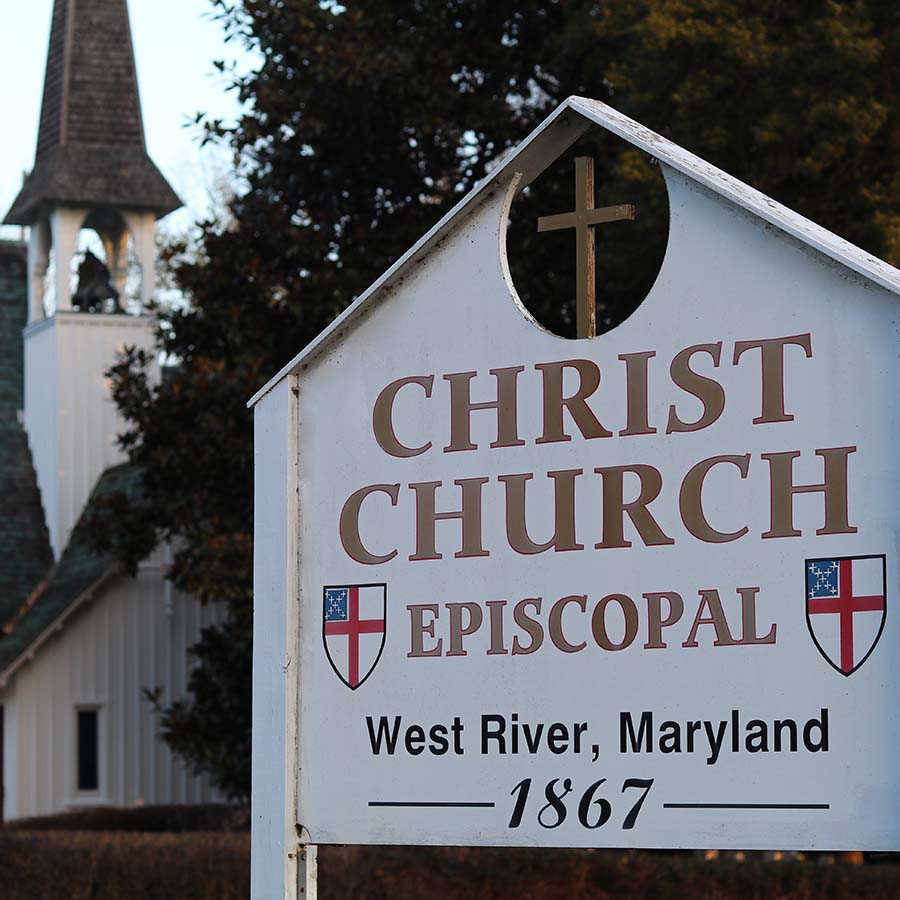
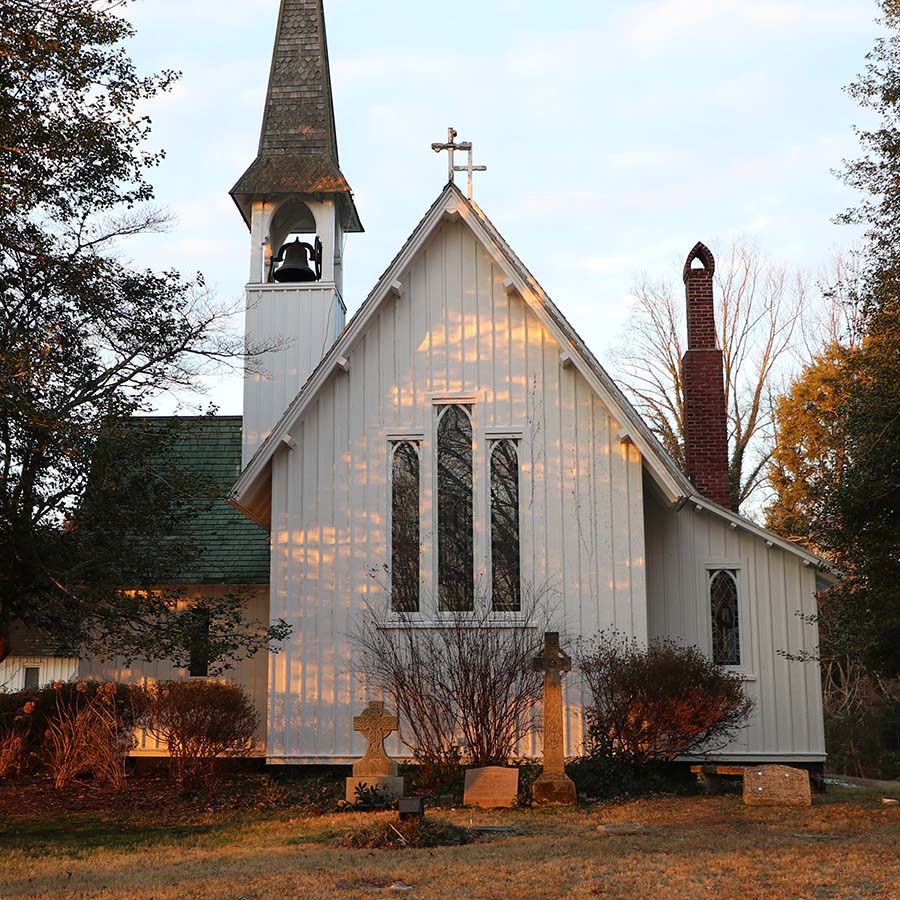
Our Chapel of Ease was later given Parish status, and after the Civil War Charles Owens deeded an additional 2 1/2 acres to the Vestry to build a new church. The construction of Christ Episcopal Church, financed by Eleanor Hall McCaleb Burwell as a memorial to two of her children, James and Annie McCaleb, was begun in 1867 and consecrated in 1869. The blueprint of the structure was taken from a 19th century sketchbook by architect Richard Upjohn. The unique architecture of Christ Church, called “Carpenter Gothic” or “Gothic Revival” features board and batten siding, a steeply pitched cedar shingled roof and a bell tower. It is considered to be the finest example of its type on the east coast. Christ Church was listed on the National Register of Historic Sites and Buildings in 1973.
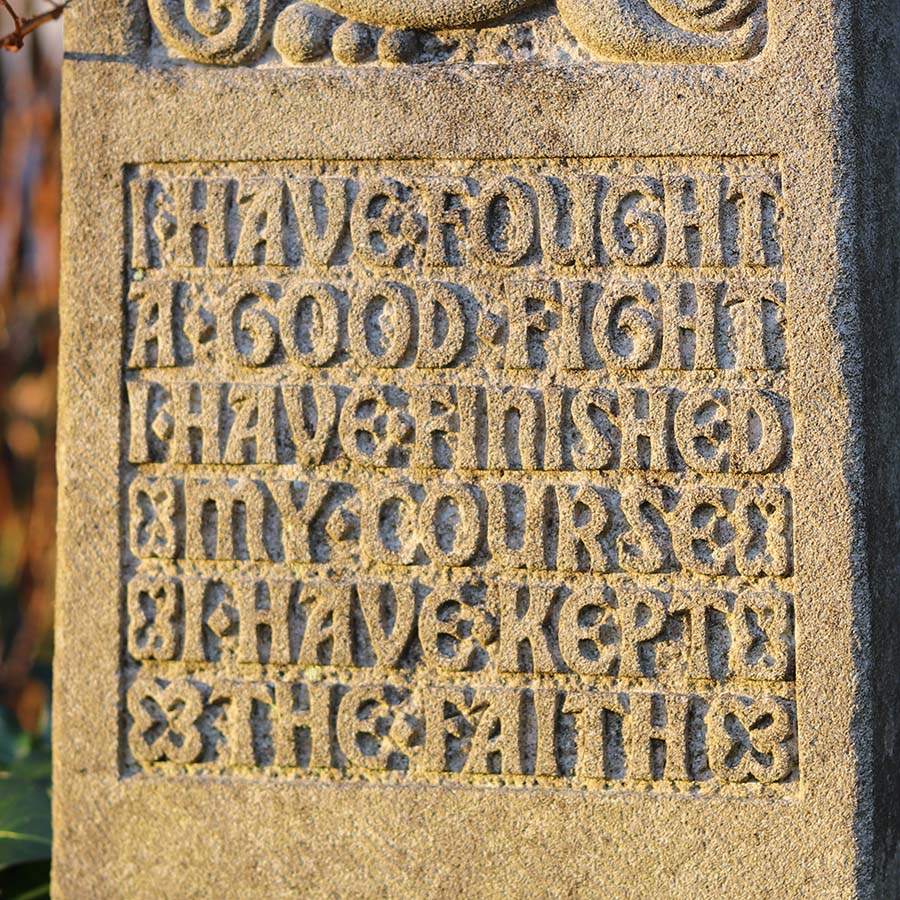
The Christ Church cemetery is a walk through the history of this West River community and the nation. Near the east window of the church can be seen the graves of Eleanor Hall McCaleb Burwell and her husband, Dr. Burwell. Next to these graves are those of the McCaleb children. The inscription on Eleanor’s stone: “I have finished the work thou hast sent me to do.” Several members of Christ Church went off to defend the Confederacy during the Civil War which raged between 1861-1865. One who fell at Gettysburg, Capt. William H. Murray, is buried directly outside the Sunday School building. Veterans of World Wars I and II, Korea, and the Vietnam Conflict are also buried here.
The entire campus of Christ Church, West River includes our Rectory, built in the 1870’s, the Sunday School and office building (1940’s) and our Parish Hall, originally West River Classical Institute.